sport
motorsports
tourism
culture
passion
Event map
Downloadable documents
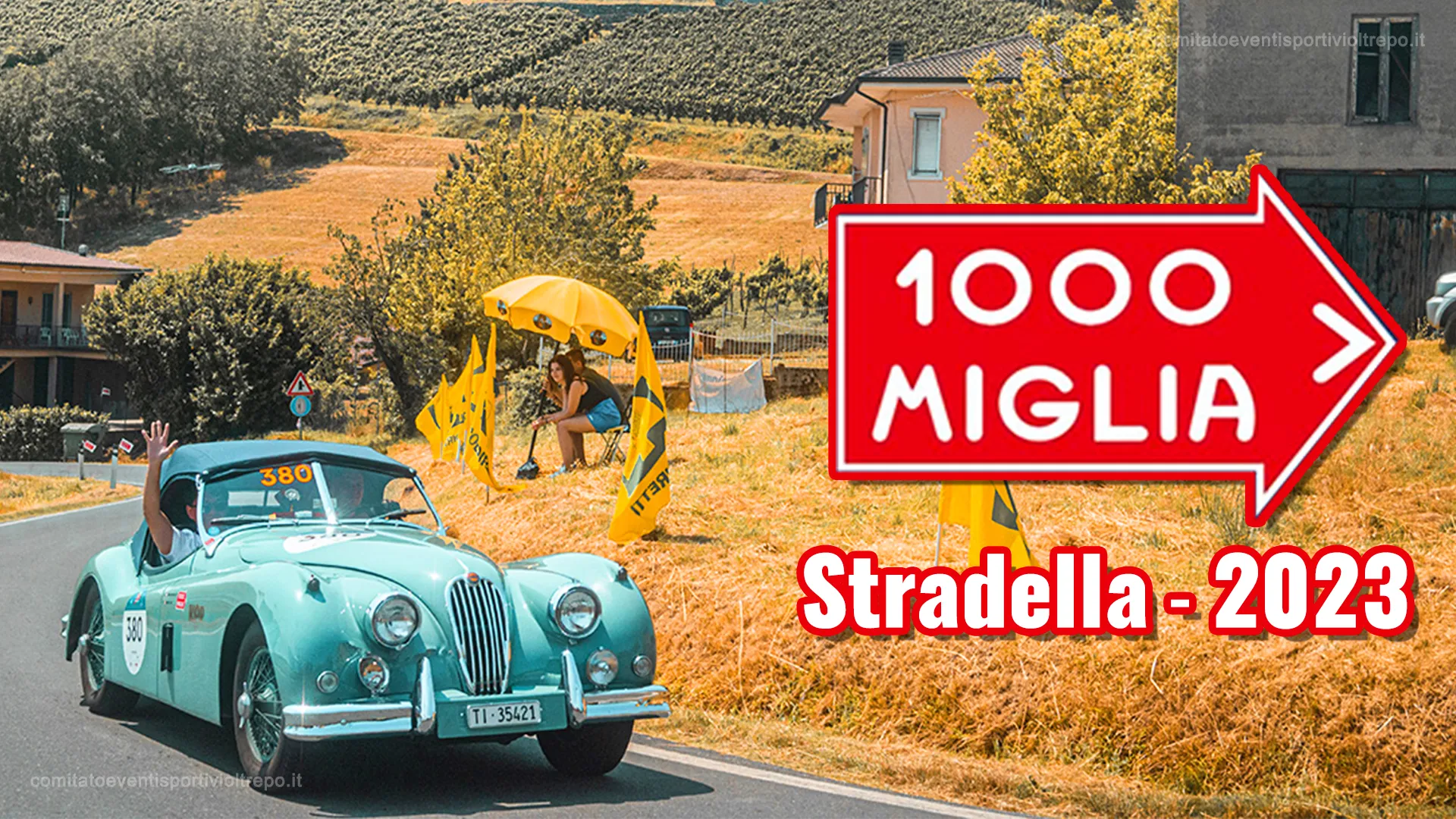
The history of the Mille Miglia
The Mille Miglia was created in 1927 as a road race on public roads, reserved for cars built between 1927 and 1957. The figure-of-eight route connects Brescia and Rome out and back over about 1600 km (≈1000 miles).
- 1927–1938: the era of the pioneers. In 1930 Nuvolari–Guidotti (Alfa Romeo 6C 1750 GS) exceeded an average speed of 100 km/h.
- 1939–1946: pause (1938 accident and the Second World War). The Gran Premio Brescia delle Mille Miglia was held on a circuit.
- 1947–1957: the modern era with factory teams and professional drivers. In 1956 Stirling Moss set the all-time record with an average of 157.65 km/h. After 1957, open-road speed races were abolished.
- 1958–1961: rally-style regularity format (three editions).
- From 1982: historic re-enactment, held annually since 1987, a regularity race open only to cars that took part in the 1927–1957 editions.
The real stars are always the cars: over the 24 original editions, Alfa Romeo won 11 times; from 1948 onwards, Ferrari collected 8 victories. For Enzo Ferrari it was “the most beautiful race in the world”.
“Mille Miglia: an evocative name which today sums up both technological progress and human daring… an exhausting, almost crazy race, non-stop through countryside and cities, over mountains and along the sea, by day and by night.”
— Giuseppe Tonelli, La Stampa, 27 March 1927
Route map
The stages of the 2022 edition
- Brescia → Cervia/Milano Marittima via Salò, Desenzano, Sirmione, Parco Sigurtà, Mantua, Ferrara.
- Cervia/Milano Marittima → Rome via Forlì, San Marino, Passignano sul Trasimeno, Norcia, parade on Via Veneto.
- Rome → Parma via Ronciglione, Siena, Pontedera, Cascina, Viareggio.
The day that crosses the Province of Pavia
- Trials at the Varano de’ Melegari circuit, then passages through Salsomaggiore Terme and Castel San Giovanni.
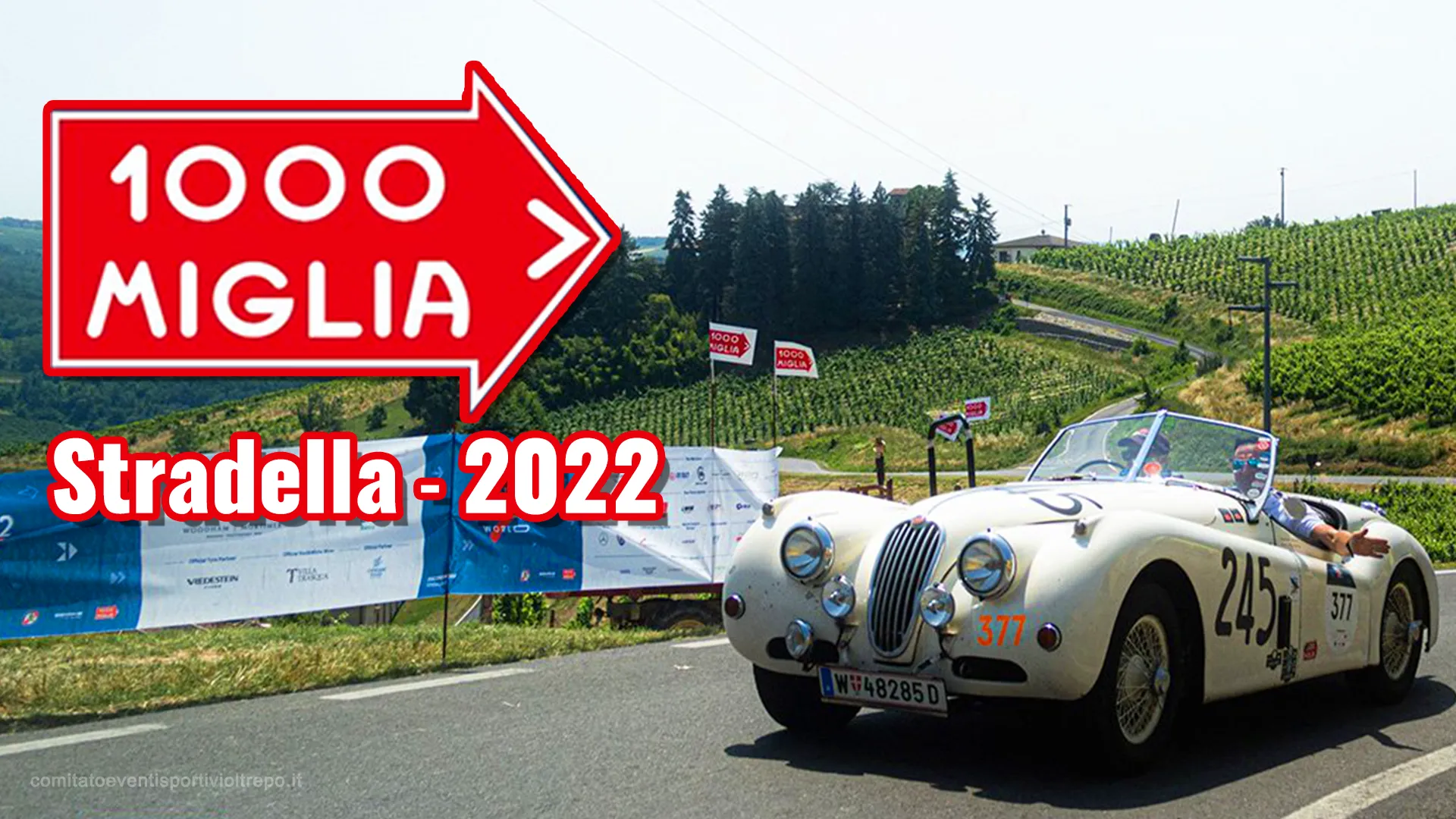
- Entry into Oltrepò Pavese (≈30 km): Bosnasco → Stradella (time control) → Canneto Pavese → Montescano → Castana → Pietra de’ Giorgi → Cigognola → Broni → Campospinoso → Albaredo Arnaboldi → Mezzanino.
- Crossing of the Ponte della Becca and arrival in Pavia (historic centre and landmarks: Visconti Castle, Cathedral, San Michele, Covered Bridge, etc.).
- Exit heading north: Certosa di Pavia → Zeccone → Siziano → Autodromo di Monza (MIMO trials) → finish in Brescia.
Places and heritage along the Pavia section
- Stradella: civic tower, historic fortress, Accordion Museum and Natural History Museum.
- San Marcello in Montalino (Stradella): Romanesque basilica (12th century), a National Monument since 1893.
- Cigognola: medieval castle, Viale delle Rimembranze, panoramic views over vineyards and valleys.
- Pavia: former Lombard and Italian capital, university founded in 1361, art itineraries along the Ticino river.
- Certosa di Pavia: monastic and sanctuary complex, a masterpiece of Lombard art.